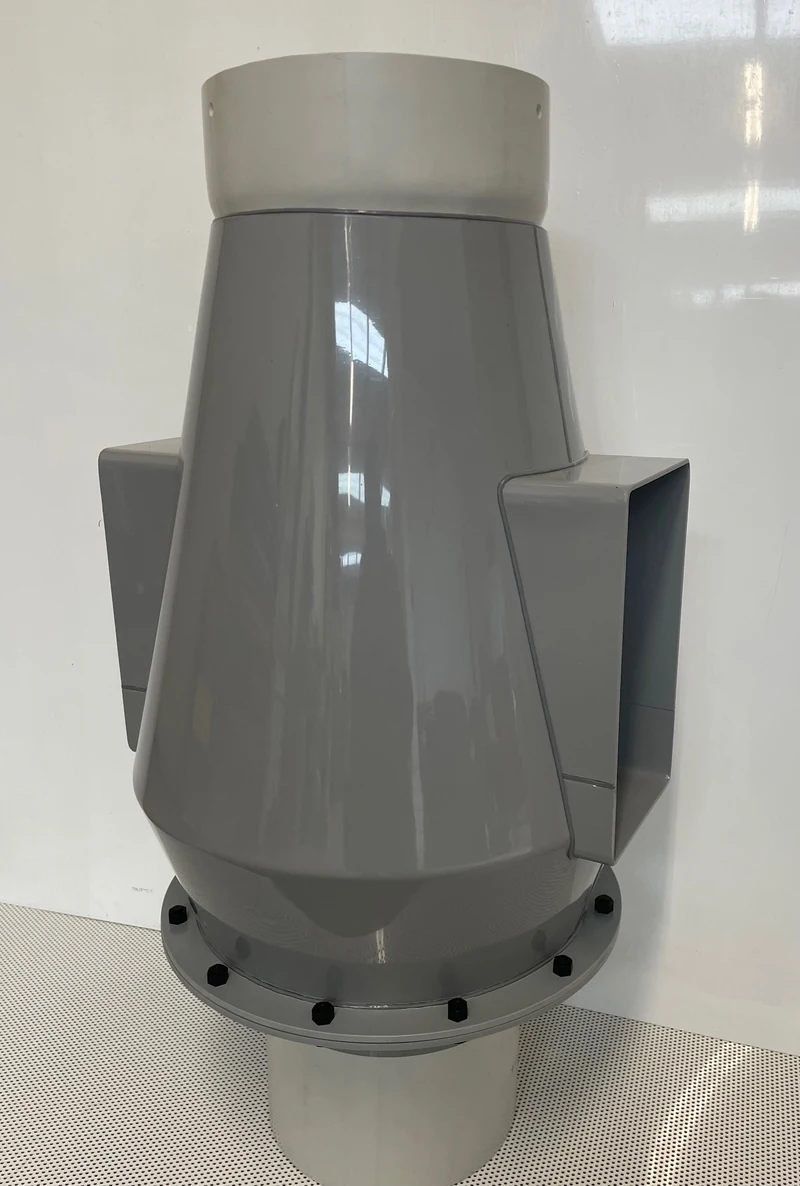
Compare the airflow paths
An axial fan moves air broadly along its shaft axis. A centrifugal fan turns the flow through its rotating wheel before discharge. Both descriptions cover many designs. Select using the duty and application requirements as well as the mechanism.
| Check | What to compare |
|---|---|
| Duty | Delivered airflow at the required pressure. |
| Air stream | Material compatibility with the exhaust conditions. |
| Installation | Connection geometry, space and access. |
| Operation | Control method, noise and maintenance requirements. |
Read performance at the same condition
Compare curves using consistent units and the same pressure basis. A high free-air volume does not show what a fan will deliver through a connected cupboard, bends and discharge route.
The system pressure-drop guide helps define the duty. Once that duty is established, the Fumeflow selection guide helps frame a product enquiry.
Identify what the fan will handle
Provide the chemicals, concentrations, temperatures and any other relevant process conditions. The wheel, casing, seals and motor arrangement all form part of the application review.
A fan used for ordinary room ventilation should not be treated as interchangeable with chemical-exhaust equipment. The process information and manufacturer’s limits matter more than a similar-looking outlet or mounting position.
Look at the proposed installation
Show the inlet and outlet connections on the drawing. Space restrictions, abrupt changes in direction and poor entry conditions can affect installed performance. Keep service access in the design rather than trying to add it after the fan is fitted.
- Confirm the complete duty with the responsible designer.
- Identify the proposed fan model and performance curve.
- Show the connection arrangement and supports.
- Agree controls, electrical work and testing responsibilities.
For an inline Fumeflow option, see the TD250 centrifugal fan information and discuss its suitability for the specified cupboard.