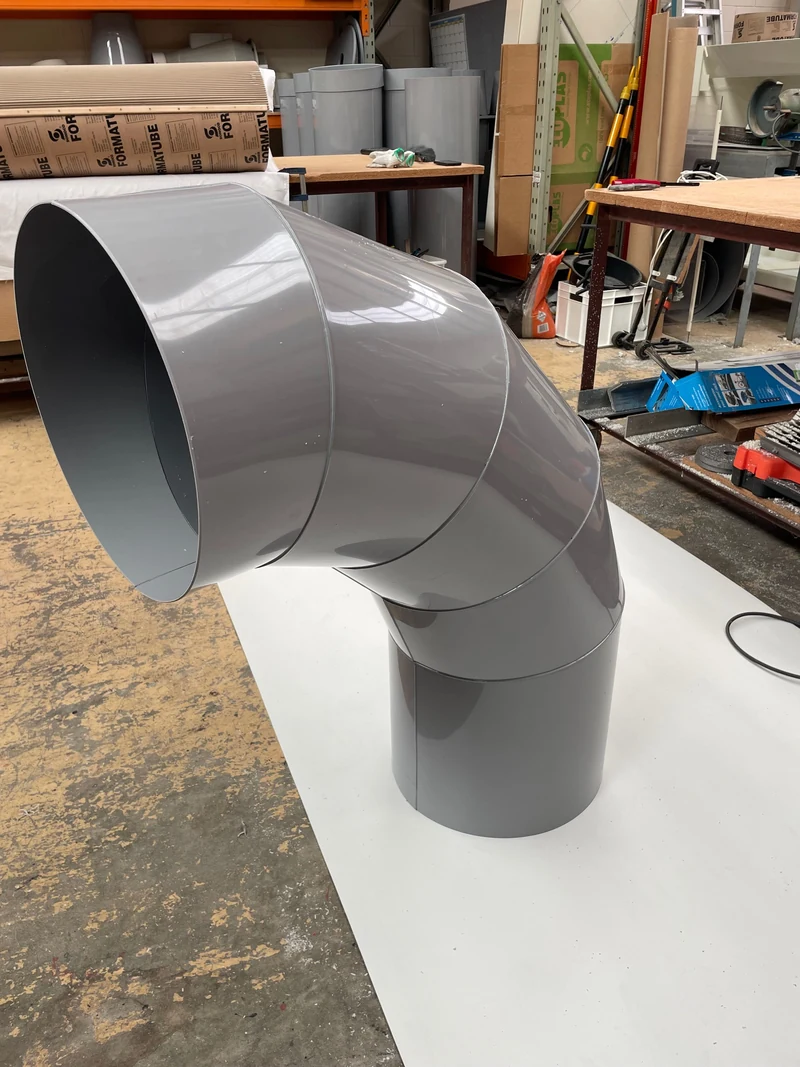
Begin with the process and material
Describe the substances carried in the air, the expected temperature and any cleaning exposure. Include intermittent work and likely future changes so the material discussion reflects the full operating conditions.
Our chemical-resistant ducting guide introduces the PVC fabrication enquiry. Use the PVC and polypropylene comparison to organise material questions with the supplier and your project designer.
Coordinate size with the system
A duct size needs to work with the design airflow, pressure losses and available route. Keep flow units, internal dimensions and the proposed connection sizes clear when exchanging drawings and schedules.
The duct-sizing brief gathers the information needed for that conversation. Our duct-velocity examples explain the relationship between area and volume flow, helping you read a proposal without treating one calculation as the whole design.
Make the route practical to fabricate
Sketch the route through the building and identify changes in direction, branch connections and access constraints. Describe supports and interfaces that need coordination with other trades before a fabrication schedule is agreed.
Use the fittings schedule to make connection details clear. The rigid and flexible ducting comparison helps frame questions about the intended arrangement and the conditions each part must withstand.
Include access and the operating environment
Plan how the route can be inspected and maintained throughout its working life. Where moisture or deposits have been observed, record the location and operating circumstances for assessment rather than making an unplanned alteration.
The condensation guide gives you a useful observation record. For a chemical-storage application, start with the cabinet ventilation brief so the cabinet requirements remain part of the system discussion.
Bring the duct route back into the fume hood design discussion so the cupboard and building requirements stay connected.
Start here
Start with the material and process brief, establish the sizing inputs with your designer, then prepare the route and connection schedule for fabrication.
Explore this topic
- Ducting for your fume extraction systemNeed new ducting, a repair or a change to an existing system? Tell us about the room and the work it supports. We can help define what is needed.
- Condensation in extraction ducts: what to recordRecord where and when duct moisture appears, gather process information and prepare a clear chemical-extraction service enquiry.
- Duct sizing for a chemical-extraction projectPrepare a chemical-extraction duct schedule with airflow duty, route drawings and connection dimensions. Explore FumeCare PVC ducting.
- Duct velocity: understand airflow measurementsUnderstand duct velocity, volume flow and area with worked examples, then identify the information needed to interpret measurements.
- Planning chemical storage cabinet ventilationPrepare a chemical storage cabinet ventilation brief and discuss the Fumeflow D65, cabinet connections and extraction requirements.
- PVC duct fittings: prepare a clear connection schedulePrepare a PVC duct-fitting schedule with dimensions, transitions and equipment connections for a FumeCare extraction project.
- PVC vs polypropylene for chemical ductingCompare PVC and polypropylene against chemical exposure, temperature and construction requirements before specifying extraction ducting.
- Rigid vs flexible ducting for chemical extractionCompare rigid duct routes and flexible connections for chemical extraction, including material suitability, performance and access.