PVC duct silencers: start with the application
Tell us what the extraction handles, where the noise is heard and how the duct connects to the fan. We can discuss the shape and size of a PVC acoustic silencer in relation to the available space and system duty. Our silencers are available in most sizes; final dimensions and suitability are confirmed for the application.
A silencer is one part of a noise-control design. It addresses sound transmitted through the duct. Vibration passing through supports, noise radiated by the fan casing and sound breaking out through duct walls can need different measures. Our extraction noise guide helps distinguish those paths.
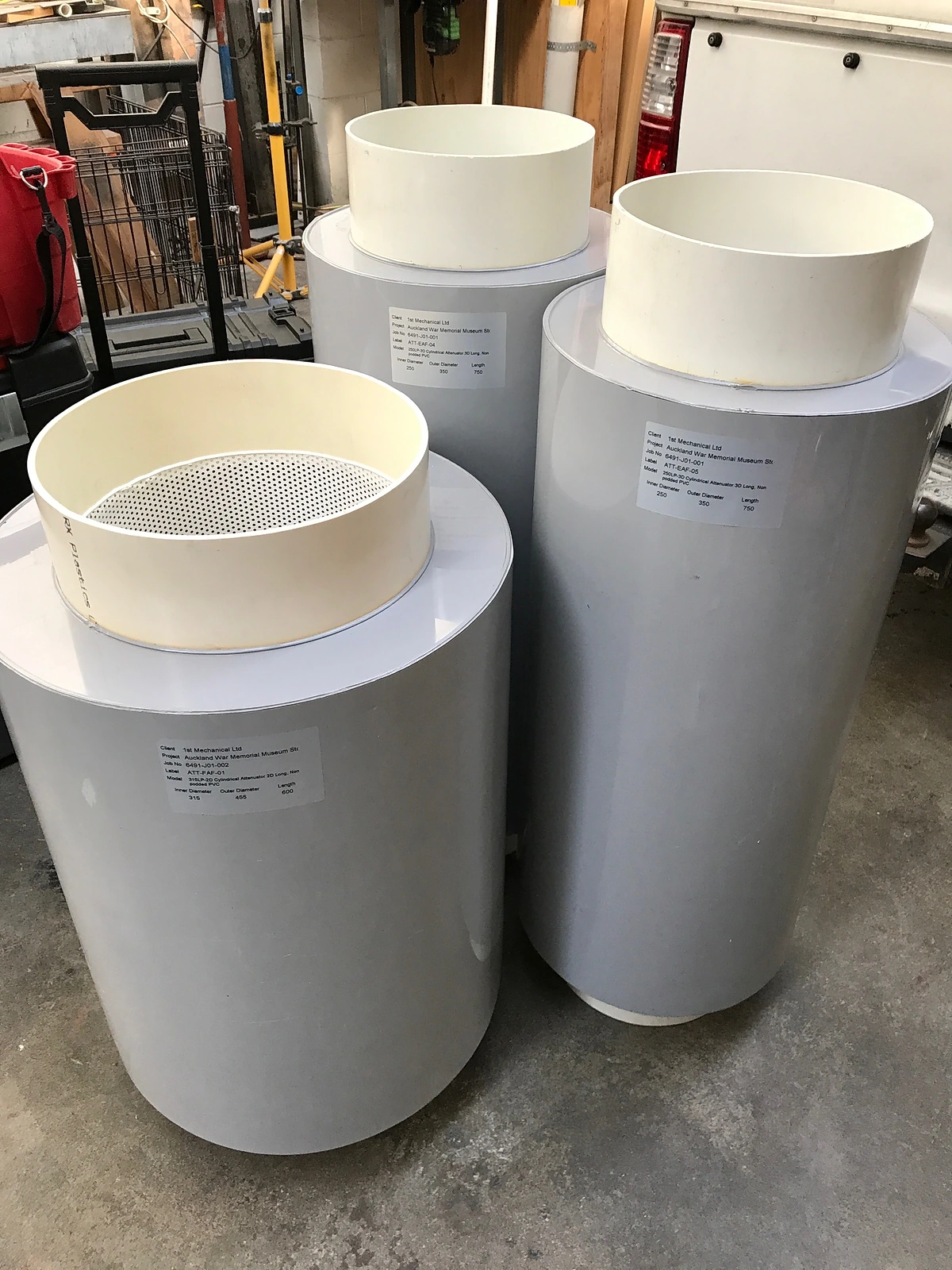
Rectangular or cylindrical duct silencer
Shape follows the duct arrangement, available installation space and required acoustic performance. A cylindrical body can suit a circular duct route. A rectangular arrangement may suit a different connection or space constraint. Any transition between shapes adds geometry that belongs in the pressure-loss and access review.
Give us the internal connection dimensions, maximum overall length and width, orientation, nearby bends and the space needed for supports and maintenance. A nominal duct size does not describe the complete silencer envelope. Check the proposed drawing before the surrounding services are fixed.
Duct sound attenuator data that helps you compare
Ask for insertion-loss data across the relevant frequency bands and the conditions under which it applies. A single overall decibel figure can conceal a weak result at the frequency responsible for the complaint. The fan's sound data and the receiver location help establish what reduction is needed.
Also consider sound generated by airflow through the silencer. Higher velocity through restricted passages can create additional noise. The useful result is the installed system's sound at the place that matters, not the largest attenuation figure on an isolated component.
Our explanation of sound power and sound pressure shows why a manufacturer's source rating and a room measurement are not directly interchangeable.
Airflow, resistance and chemical compatibility
Specify airflow and allowable pressure loss alongside the acoustic requirement. Adding resistance can shift the fan's operating point and reduce flow unless the design accounts for it. Check the complete duty with the selected fan curve.
The chemical review includes the casing, internal surfaces, insulation protection, joints and any expected condensate. Describe the substances, concentrations, temperatures and cleaning method. A material name alone is not enough to establish compatibility with every mixture or operating condition.
For the wider route, use our ductwork design guide. The silencer installation guide covers supports, access and handover once a component has been selected.
Information for a silencer quotation
Send a sketch or drawing showing the fan, silencer location, duct route and nearby occupied areas. Include the airflow, pressure allowance, chemical conditions, connection dimensions and available space. If you have a noise assessment, include the frequency data and measurement position.
Agree what is included in the supply: connections, supports, installation responsibilities and the data needed for final selection. A site-specific brief lets us discuss a practical PVC silencer without treating noise reduction and extraction performance as separate jobs.
Your questions
Will a duct silencer stop vibration through the building?
A duct silencer primarily addresses sound travelling through the air path. Vibration transmitted through supports needs its own assessment.
Can I choose a silencer by duct diameter alone?
No. Airflow, pressure loss, frequency performance, chemistry and the installation envelope also matter.