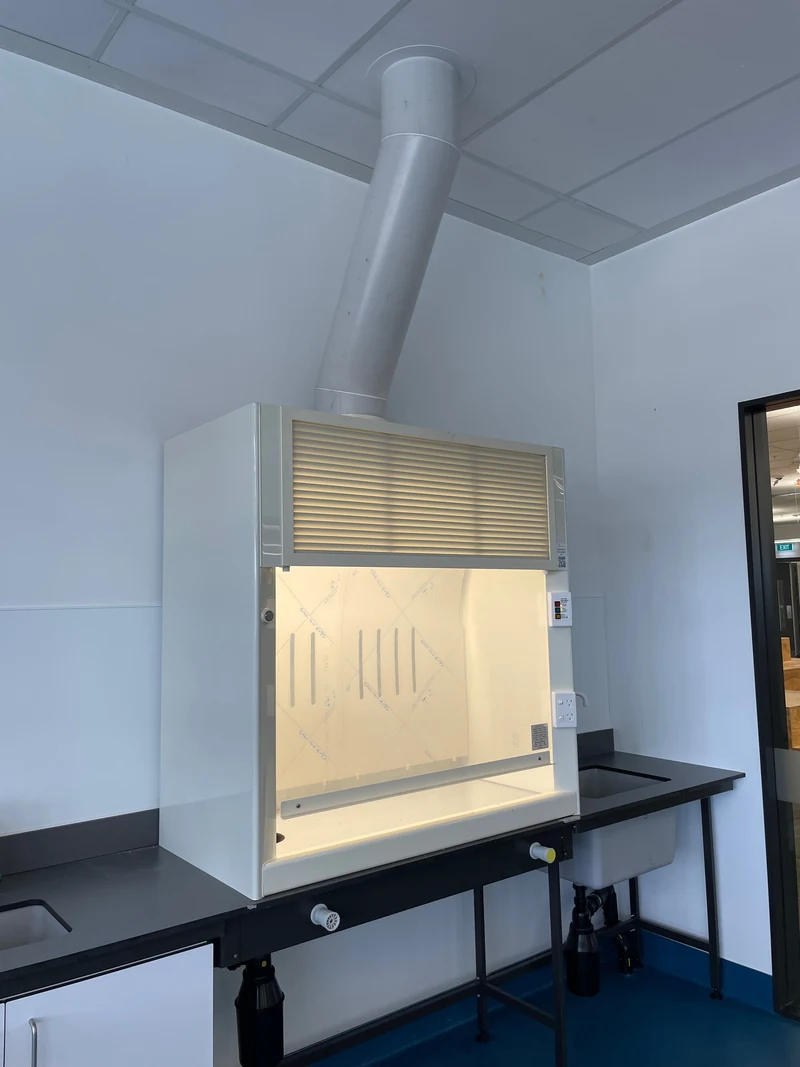
Define the task before the model
Start with what will happen inside the cupboard: the chemicals, quantities, temperatures and equipment involved. Include cleaning and occasional procedures as well as everyday work, so your brief describes the whole job. Understanding how a fume hood works makes the equipment brief easier to discuss.
Our guide to fume hood types separates enclosure format from air handling and controls. For specialist chemical work, use the chemical-resistance brief to organise the information your project team needs.
Compare the protection and air route
Different laboratory enclosures serve different purposes. Work with your safety adviser to identify the required protection before comparing features, especially when the task involves both chemical and biological hazards.
Explore chemical cupboards and biological safety cabinets, then review the ducted and ductless options. Keep the substances, workload and proposed exhaust route together when discussing suitability.
Check the working space and controls
Measure your largest apparatus and describe how someone loads, operates and removes it. A cupboard that fits the room also needs to give the operator practical access to the task.
Use the cupboard dimensions checklist before comparing Student, Smoothflow and SashDrive. For teaching rooms, involve both the science and property teams in school cupboard planning.
Build a complete purchasing brief
Put the cupboard, supporting bench, fan, duct route, room air and building services into the same conversation. Record who will coordinate each part, along with the proposed installation and handover dates.
Our budgeting guide helps separate equipment from the wider project scope. Compare quotations against that shared scope, then agree the operating instructions, training and service records you will need after installation.
Once you have a shortlist, coordinate it with the room using our fume hood design guide.
Start here
New to the process? Understand the equipment choices first, check the available working space, then compare the Calibre models against the same requirements.
Explore this topic
- Acid fume hoods: prepare a chemical-resistance briefPrepare an acid-work equipment brief covering substances, procedures and exposed components before selecting a fume cupboard.
- Choosing a benchtop fume cupboardChoose a benchtop fume cupboard for your apparatus and laboratory. Check bench fit, extraction and installation requirements with FumeCare.
- Bypass fume hoods: understand the air pathUnderstand how a bypass fume cupboard admits air as the sash closes, with practical questions for Calibre Student and Smoothflow projects.
- Which fume cupboard suits your space?Choosing between Student, Smoothflow and SashDrive? Tell us how you’ll use the cupboard and where it will go. We’ll help you compare the options.
- Budgeting for your fume cupboardCompare the equipment, building work and handover included in a fume cupboard quote. Prepare a useful project brief with FumeCare.
- Measure the space for your fume cupboardCheck Calibre cupboard dimensions and prepare a measurement worksheet for your apparatus, bench, room and delivery route.
- Chemical fume hood or biosafety cabinet?Compare chemical fume hoods and biosafety cabinets by hazard and protection needs. Prepare a chemical-extraction brief for FumeCare.
- Fume hood vs canopy hood: compare capture at the taskCompare an enclosed fume cupboard with a canopy hood by source, airflow and operator position before choosing the control approach.
- Ducted or ductless: choosing a fume hoodCompare ducted and ductless fume hoods by chemical task, building requirements and ongoing responsibilities. Discuss ducted extraction with FumeCare.
- Fume hood or glove box: compare the taskCompare a fume hood with a glove box by access, containment and atmosphere control. Prepare the task details needed to choose laboratory equipment.
- Fume hood or laminar flow clean bench?Understand the difference between a fume hood and a laminar flow clean bench, then define the protection your laboratory task requires.
- Fume hood types: choose the right starting pointCompare fume-hood air routes, controls and formats, then connect your laboratory requirements with the Calibre cupboard range.
- A fume cupboard for your schoolPlanning a new science room or replacing an old cupboard? Tell us what you need. We’ll help you work through the options and what the installation involves.
- Could SashDrive suit your laboratory?SashDrive adjusts the exhaust fan speed in response to the sash position. Talk to us about your cupboard use and room ventilation to explore whether it suits your project.
- Variable air volume fume hoods: how control worksUnderstand variable air volume control, sash position and room-air coordination before discussing a laboratory extraction installation.
- Fume hood accessories: prepare a practical specificationBuild a fume hood accessory schedule covering work surfaces, services, supports and controls, with clear responsibilities for supply and installation.
- Fume hood vs wet bench: compare the process needsCompare a fume hood with a wet processing bench by workflow, liquid handling, extraction and services, then prepare a clear equipment brief.