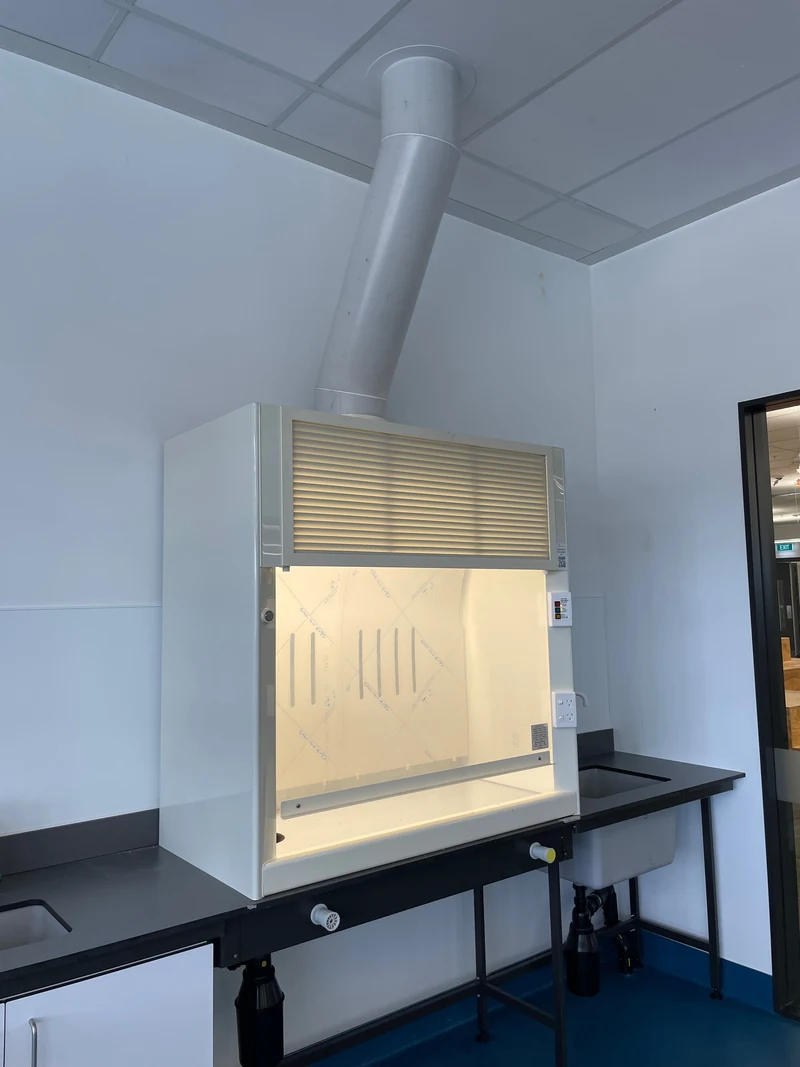
What the bypass does
The sash changes the size of the working opening. In a bypass cupboard, an additional opening admits air as the sash is lowered. The arrangement is designed to limit changes in airflow behaviour across the sash’s operating range.
This is different from a system that actively reduces exhaust volume with sash position. For that approach, see variable air volume control. The two arrangements need different coordination with the room ventilation.
Separate three questions
| Question | Why it matters |
|---|---|
| Where does bypass air enter? | Furniture, stored items and alterations must not obstruct the intended route. |
| What is the approved working sash position? | The operating opening is part of the cupboard’s tested arrangement. |
| How is the exhaust controlled? | A closed sash does not by itself mean the fan reduces its output. |
Keep the cupboard instructions and latest test record available to users. Treat the sash as an operating control, rather than a convenient storage door.
Choose between Student and Smoothflow
Start with the work area, equipment and teaching or laboratory task. The bypass principle alone does not select a model. Compare the Calibre cupboard range, then confirm the selected model’s dimensions, service requirements and fan arrangement.
A proposal should identify the cupboard and extraction duty together. Reusing a fan from another cupboard needs a review of the full duct route and operating conditions, even when the connections look similar.
Keep the intended configuration
- Keep bypass openings and internal air passages clear.
- Use the documented working sash position.
- Include large apparatus in any review of the working arrangement.
- Report damaged panels, missing parts or changed airflow indications.
- Arrange assessment before fitting accessories or changing controls.
For ongoing care, use our maintenance checklist alongside the manufacturer’s instructions. If the cupboard is altered, include testing and updated user instructions in the work scope.