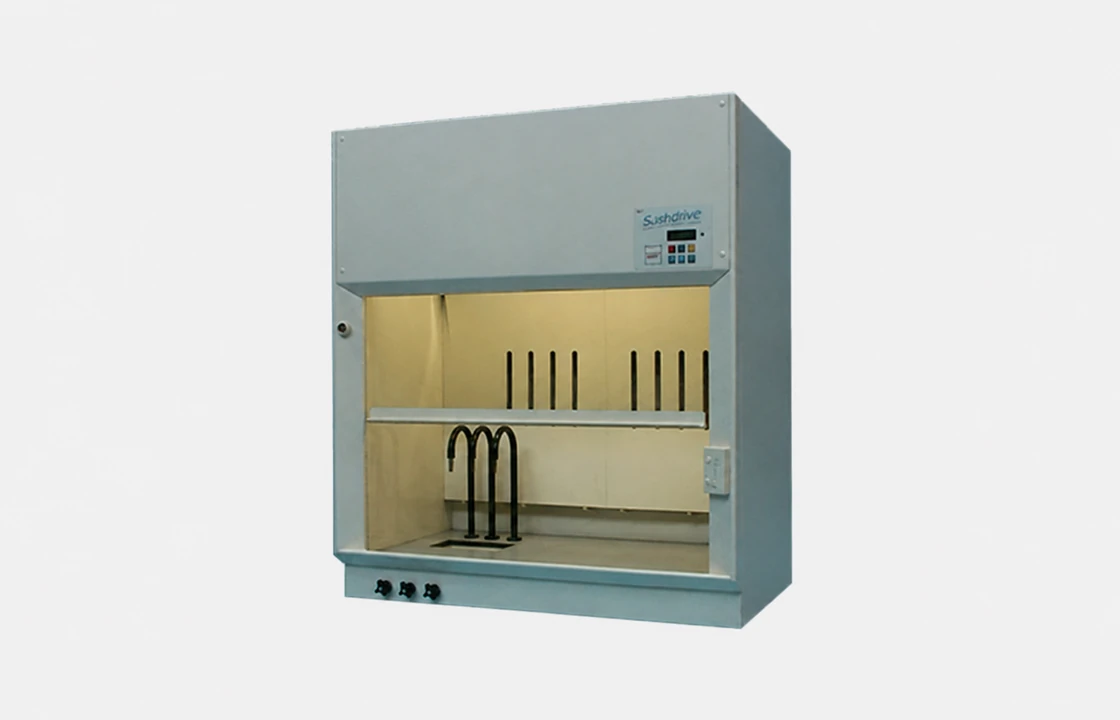
Understand what changes with SashDrive
SashDrive measures sash position and uses it to regulate the exhaust fan speed. With the sash lowered, it extracts a smaller volume of laboratory air. Where that air has been heated or cooled, reducing the extracted volume can reduce associated energy losses.
We can help you assess SashDrive for your work, controls, operating pattern and building services.
Collect the evidence for an energy discussion
| Information | Question it helps answer |
|---|---|
| Operating hours | When does the system run and why? |
| Typical sash use | How much time is the opening needed for the task? |
| Current fan and controls | What equipment and control arrangement is installed? |
| Room ventilation arrangement | How is replacement air provided and conditioned? |
| Available energy measurements | Is there a measured baseline, and what does it include? |
Compare the same service outcome
Ask the project team to define the operating and containment requirements before comparing energy options. Record the assumptions used in any estimate, including operating hours and expected user behaviour. If no measured baseline exists, distinguish an engineering estimate from a verified saving.
A complete scope may involve cupboard controls, fan-drive compatibility and room ventilation coordination. The D250 can use an inverter arrangement that responds to a SashDrive signal. Ask us to check your existing configuration when planning an upgrade.
Questions for a SashDrive proposal
- Which cupboard, fan, drive and control components are included?
- How will the proposed arrangement work with the room’s ventilation?
- What assumptions underpin the expected reduction in extracted air or energy use?
- How will commissioning confirm performance, and how will any energy outcome be measured?
Consider two laboratories with the same model but different working patterns. One may need regular operator access; another may have different sash-use requirements. Their energy assessments should use their own tasks and operating data. Staff should follow the approved operating instructions; energy targets should never lead users to disable controls or alter safe-use settings.
Bring your current model and control details to FumeCare for a product discussion. Where building-level energy analysis is needed, agree who will provide it and how it connects to the equipment proposal.