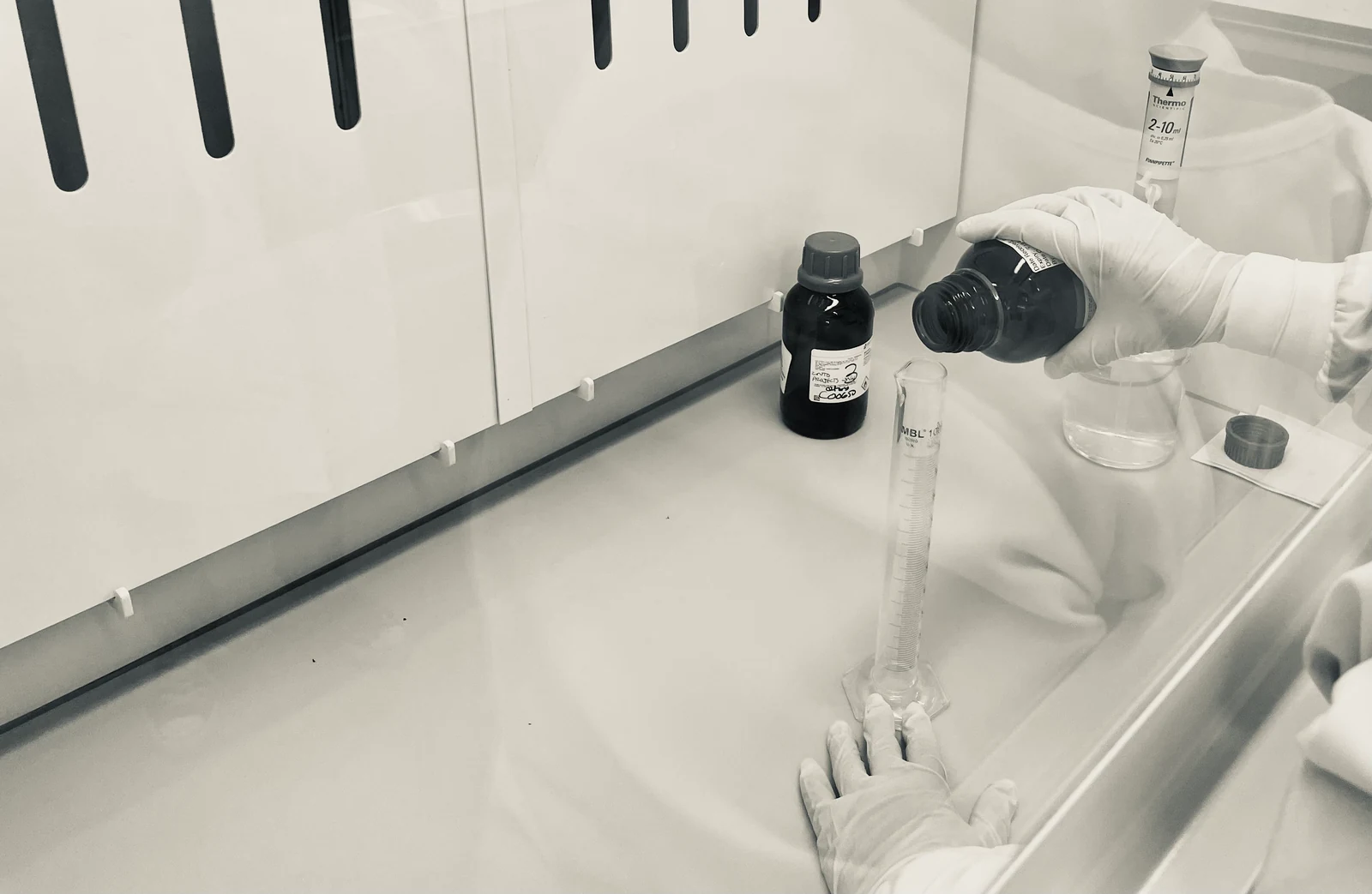
Identify the hazard and the protection needed
A chemical fume hood draws air away from the operator to control chemical fumes and vapours. A biological safety cabinet uses controlled airflow and filtration for biological containment. Its protection depends on the cabinet class and configuration.
Begin with two questions: what could leave the process, and what must be protected? Record the operator, sample and environment requirements separately. Your laboratory’s risk assessment should determine the required equipment category.
Use a task-based comparison
| Task question | What to establish |
|---|---|
| Are chemical vapours generated? | Identify the chemicals and the extraction or treatment required. |
| Are biological agents or aerosols involved? | Establish the biological containment level and cabinet requirements. |
| Must the sample remain protected from room contamination? | Identify the product-protection requirement separately from operator protection. |
| Does the work combine chemical and biological hazards? | Have the complete method and specific cabinet configuration assessed together. |
Check the exact cabinet type
Biosafety cabinet classes provide different combinations of personnel, product and environmental protection. A HEPA filter captures particles; chemical gases and vapours need a suitable control method for the substances involved.
For mixed-hazard work, give the assessor the full chemical and biological procedure. Include quantities, aerosol-generating steps and any exhaust requirements. Choose from the documented suitability of the complete configuration rather than the word “hood” in a product name.
For clean product handling, see the laminar flow clean-bench comparison. A task needing an enclosed or controlled atmosphere raises different questions in our glove-box comparison.
Prepare the chemical-extraction brief
If the assessment calls for a chemical fume cupboard, we can discuss our Calibre fume cupboards and the extraction arrangement. Send the intended process, apparatus dimensions, service needs and room details.
For example, product sterility and solvent-vapour control are separate requirements. Put both in the brief if the method needs both, so neither is lost during procurement. Our cupboard comparison helps with the next model discussion once the equipment category is established.
For an existing installation, include the identification label and available test or service records. These help us discuss the cupboard you have and the proposed chemical work.