Start with what you are protecting
A clean bench supplies filtered air across the work area for non-hazardous processes that need a clean environment. It does not provide the operator protection of a chemical fume hood.
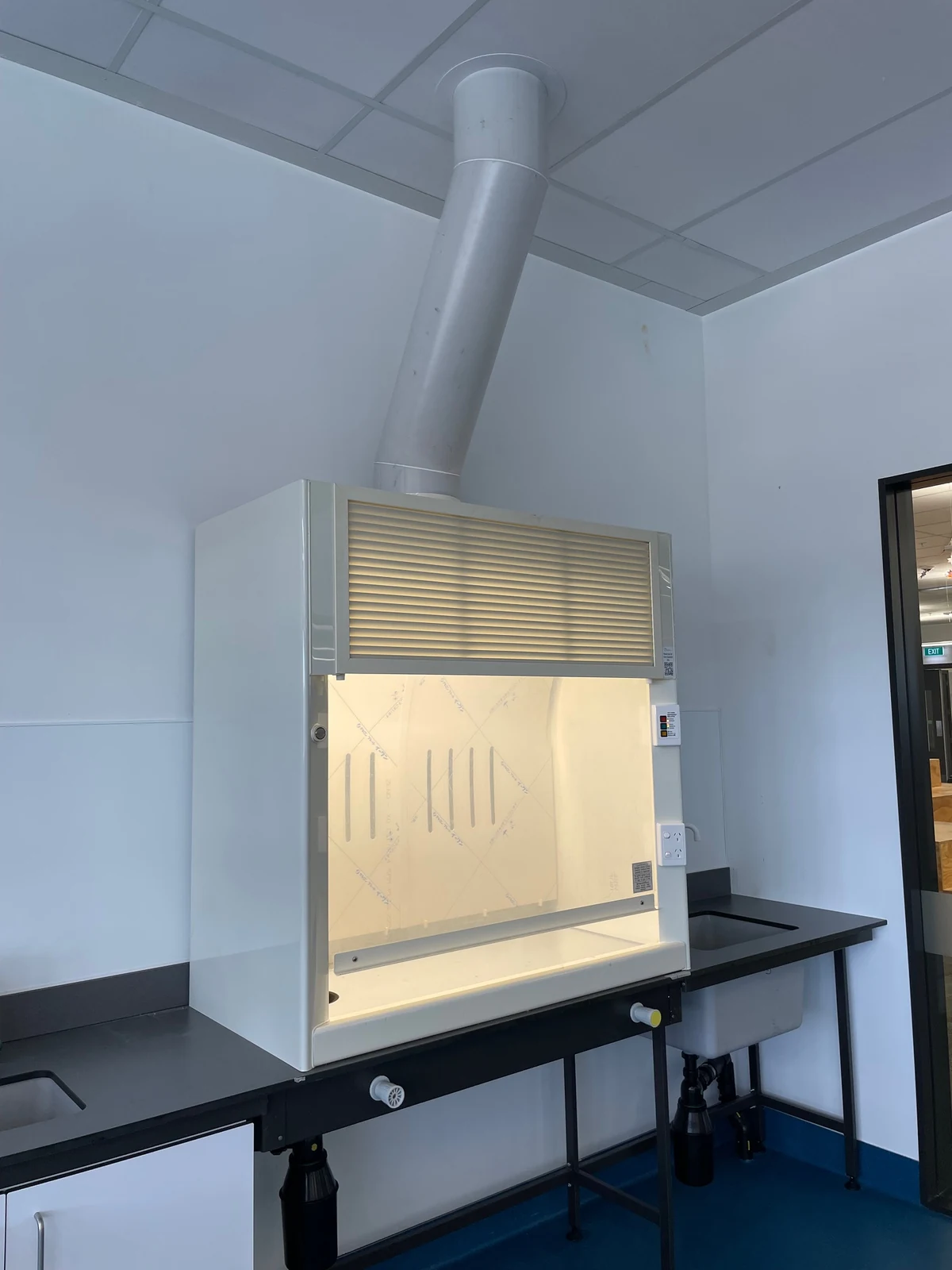
A fume hood draws air into its opening and away from the operator. Its purpose is chemical containment rather than providing a sterile working environment. Write the required protection into the equipment brief before comparing sizes or features.
Match the question to the equipment role
| Requirement | Discussion to have |
|---|---|
| Keep a non-hazardous product clean | Confirm the clean-work conditions and suitable clean-bench configuration. |
| Control chemical fumes or vapours | Assess a chemical fume cupboard and its extraction system. |
| Handle biological hazards | Establish the biological containment requirements with the laboratory’s safety team. |
| Combine several requirements | Assess the complete procedure and the specific enclosure before purchase. |
Clarify what “laminar flow” means in the enquiry
Laminar flow describes an airflow pattern, and similar wording is used for different laboratory enclosures. A clean bench and a biological safety cabinet are not interchangeable just because both use filtered airflow.
Use the exact equipment type, model and intended task in your enquiry. If replacing an existing unit, photograph the identification plate and keep the operating manual with the project records. This avoids a procurement request based on an ambiguous label such as “lab hood”.
If biological material is involved, use the biosafety cabinet comparison to distinguish that containment question from clean-bench product handling.
Plan the chemical-work station
For chemical extraction, tell us which substances and processes are involved, what apparatus must fit and where the cupboard will stand. Include utilities, room ventilation and any available exhaust route.
We can help you discuss the fume cupboard and fan arrangement for that work. Our Calibre model comparison covers Student, Smoothflow and SashDrive, while the installation planning guide helps coordinate the building work.
For example, keeping dust away from a non-hazardous sample and drawing solvent vapour away from an operator are different jobs. Describing the actual process makes that distinction clear before equipment is ordered.