Compare the two methods
| Question | Ducted | Ductless |
|---|---|---|
| Where does air go? | Through an exhaust system to an outside discharge. | Through specified filters and back into the room. |
| What needs assessing? | Cupboard suitability, fan, duct, discharge and room air supply. | Chemical and filter compatibility, loading, monitoring and replacement arrangements. |
| What changes with a new process? | The suitability of the enclosure and extraction system must be reviewed. | The chemical assessment and filter suitability must be reviewed. |
Begin with a chemical and task list
Record the substances, concentrations, quantities and processes involved. Include heating, reactions and any mixtures. Explain whether the work is routine or expected to change. This gives the laboratory and equipment specialists a useful basis for choosing the containment method.
A filter should be selected for the assessed application. A particulate filter and a filter intended for chemical vapours perform different jobs. Match the enclosure and specified filtration to the substances and procedure.
The filter guide separates particle filtration from vapour control. If biological containment is part of the task, compare the role of a biosafety cabinet before choosing the enclosure.
Review the building requirements
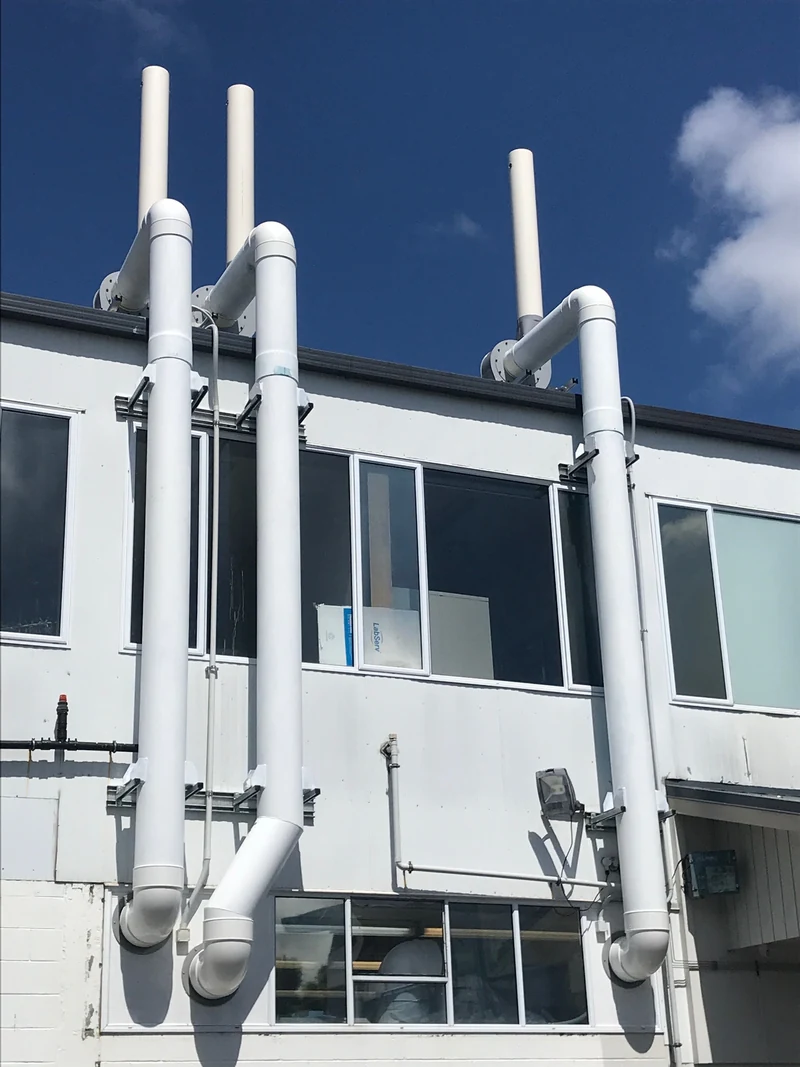
For a ducted cupboard, the fan and duct route need to work with the discharge position and laboratory air supply. Show the proposed room, ceiling and roof route early, including access for installation and maintenance.
We manufacture Calibre fume cupboards and Fumeflow fans and can discuss the ducted equipment for your project. Our installation planning guide sets out the information to share with the wider project team.
Compare responsibilities over the equipment’s life
Ask who will maintain the equipment, review changes in use and keep the records. With a filtered system, that includes the specified checks and filter replacement arrangements. With a ducted system, include the extraction and building interfaces in the maintenance scope.
Compare complete proposals for the same chemical task. Identify equipment, installation, operating assumptions and ongoing checks separately. For example, a proposal for one fixed solvent process should not be treated as interchangeable with a cupboard needed for changing laboratory work.