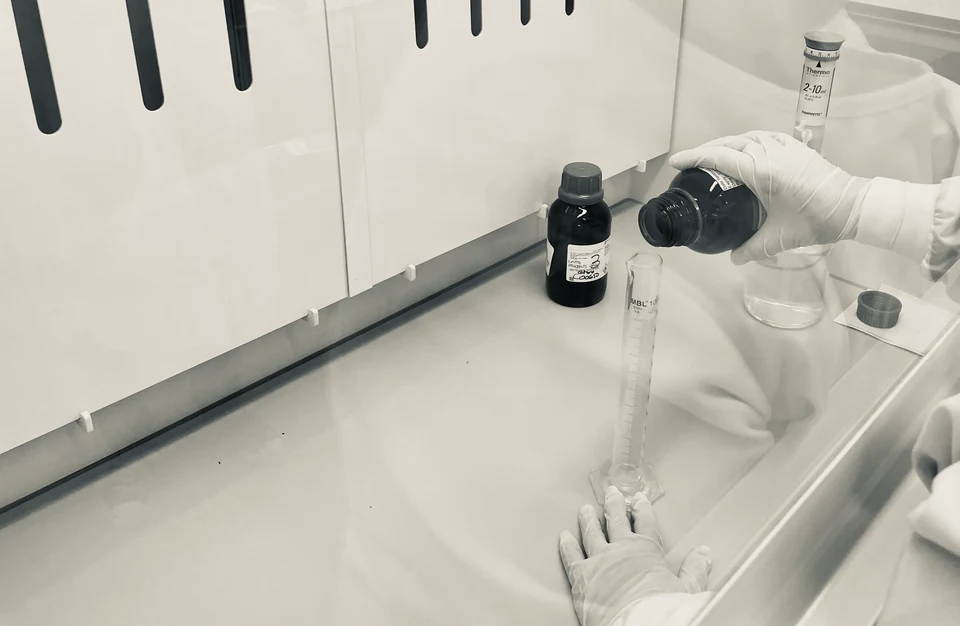
Start with the work you need to do
List the steps from loading the material to removing the finished sample and handling waste. Include chemical transfer, heating, rinsing and cleaning where they form part of the process. The fume hood airflow explanation provides the enclosure side of that comparison.
A cupboard enquiry often starts with apparatus that needs an extracted working enclosure. A wet-bench enquiry may start with a sequence of liquid-treatment steps and the equipment needed to carry them out repeatedly.
Use our guide on how to choose a fume hood to bring the process, apparatus and room requirements together. The comparison below helps you identify the extra questions a wet-processing task introduces.
Compare the functions, not just the footprint
| Decision | Fume hood enquiry | Wet bench enquiry |
|---|---|---|
| Working arrangement | Space and access for the apparatus inside an extracted enclosure. | Sequence and layout of liquid-processing stations. |
| Liquid handling | Vessels, services and any required sink or collection arrangement. | Baths, rinsing, transfer and collection requirements integrated into the process. |
| Air management | Containment and exhaust requirements for the chemical task. | Extraction at the process, plus any separately specified sample-cleanliness requirement. |
| Controls | Cupboard controls and the apparatus operated within it. | Process monitoring, timing or automation where the task requires it. |
For either option, the final configuration needs assessment against the actual substances and method. A sink, sash or clean-air feature on its own does not describe the complete protection provided by an installation.
Keep extraction and sample cleanliness separate
Controlling chemical emissions and protecting a sample from contamination are different design requirements. Identify each one in the brief, including the substances released and the cleanliness the process needs.
Some wet-processing systems combine several functions. Ask for each function to be described and documented, including its operating conditions and building connections. This helps your project team compare proposals on the same basis.
Our fume hood and laminar-flow comparison explains why a clean-air description is not interchangeable with chemical extraction. For material questions, use the chemical-work specification guide to gather the exposure details.
Prepare a brief your suppliers can assess
Share the chemical list, process sequence, vessel dimensions, temperatures, working quantities and expected throughput with your safety adviser and equipment suppliers. Add the utilities and waste-handling requirements identified by the project team.
- Draw each process step and show how material moves between them.
- Identify the apparatus already selected and the decisions still open.
- Separate operator protection, sample quality and process-control requirements.
- Show the available room, service connections and proposed exhaust route.
- Agree who coordinates equipment, building services and handover.
For a Calibre cupboard proposal, bring that brief to us with your accessory requirements. We can discuss the enclosure and extraction scope against the task you need to carry out.