Start with the noise, location and timing
Is the concern a steady sound during normal operation, a new rattle, vibration or a change noticed after other work? Record the location: beside the cupboard, in an adjacent room or outside near the exhaust. Note whether the sound varies during the operating sequence.
A new or changed sound may need a maintenance investigation before a silencer is considered. Record observations from a safe location and follow your laboratory’s fault procedure if performance is also in doubt. A recording may help explain the symptom, but it is not a calibrated noise measurement.
What an enquiry should contain
| Detail | Why it matters |
|---|---|
| Noise location and description | Helps identify where assessment should begin. |
| When it occurs | Separates a new symptom from an established operating concern. |
| Cupboard, fan and duct arrangement | Connects the acoustic question to the actual system. |
| Space and access | Shows whether a proposed component can be installed and maintained. |
| Existing measurements or project criteria | Gives the assessment a defined objective, if available. |
Discuss a silencer as part of the system
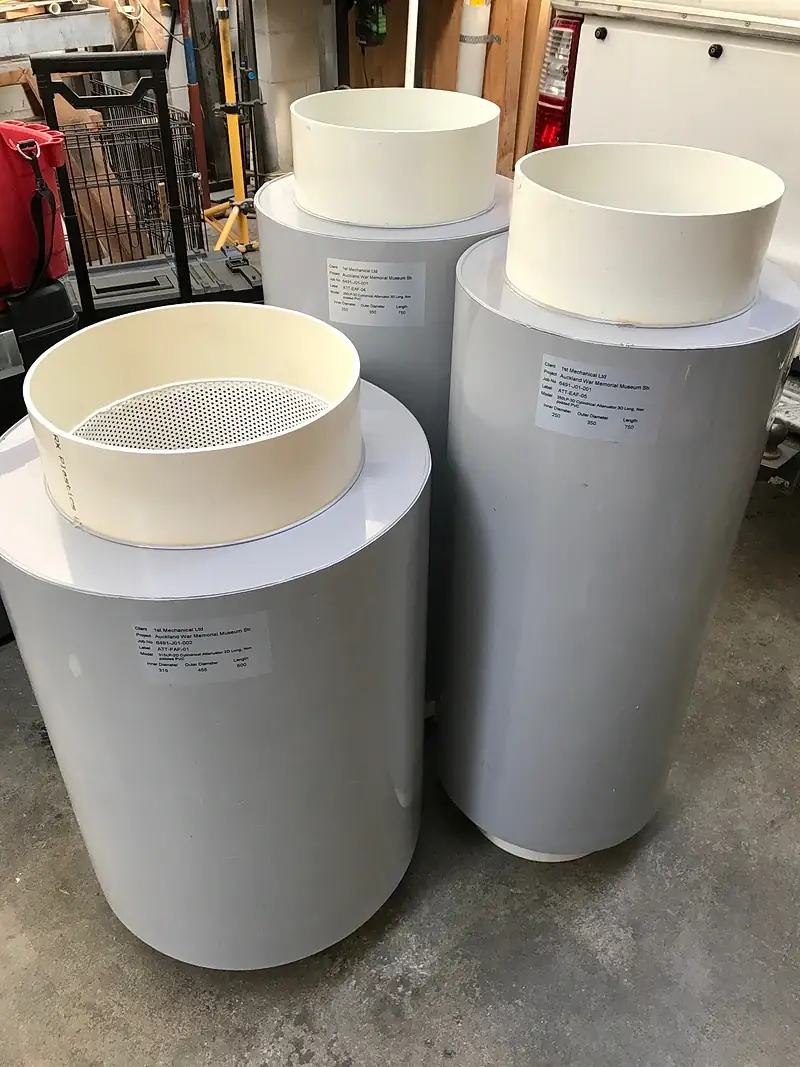
We fabricate PVC silencers for rectangular and cylindrical ducts, using sound-dampening insulation. Ask about the design for your particular application, available space and chemical environment. Agree the acoustic design criteria and assessment with the responsible designer.
Consider material compatibility alongside acoustic needs. Ask the responsible designer how any proposed component affects the complete extraction arrangement and what system checks are required after installation.
Set a useful scope for the next step
- If the noise has changed, provide the service history and request a fault review.
- If it is an established design concern, define the affected space and desired assessment.
- Clarify who will provide any acoustic measurements and design criteria.
- Agree equipment, installation, performance checks and handover responsibilities.
For example, “a steady sound in the teaching room whenever the extraction runs” and “a new roof-fan rattle since last week” should not automatically lead to the same response. State the facts and ask FumeCare which assessment is appropriate.
For a new project, raise noise during fan and duct planning so space and access can be considered early. For an existing installation, send available drawings and equipment labels. Do not add improvised lining, restrict airflow or change controls as a noise remedy.