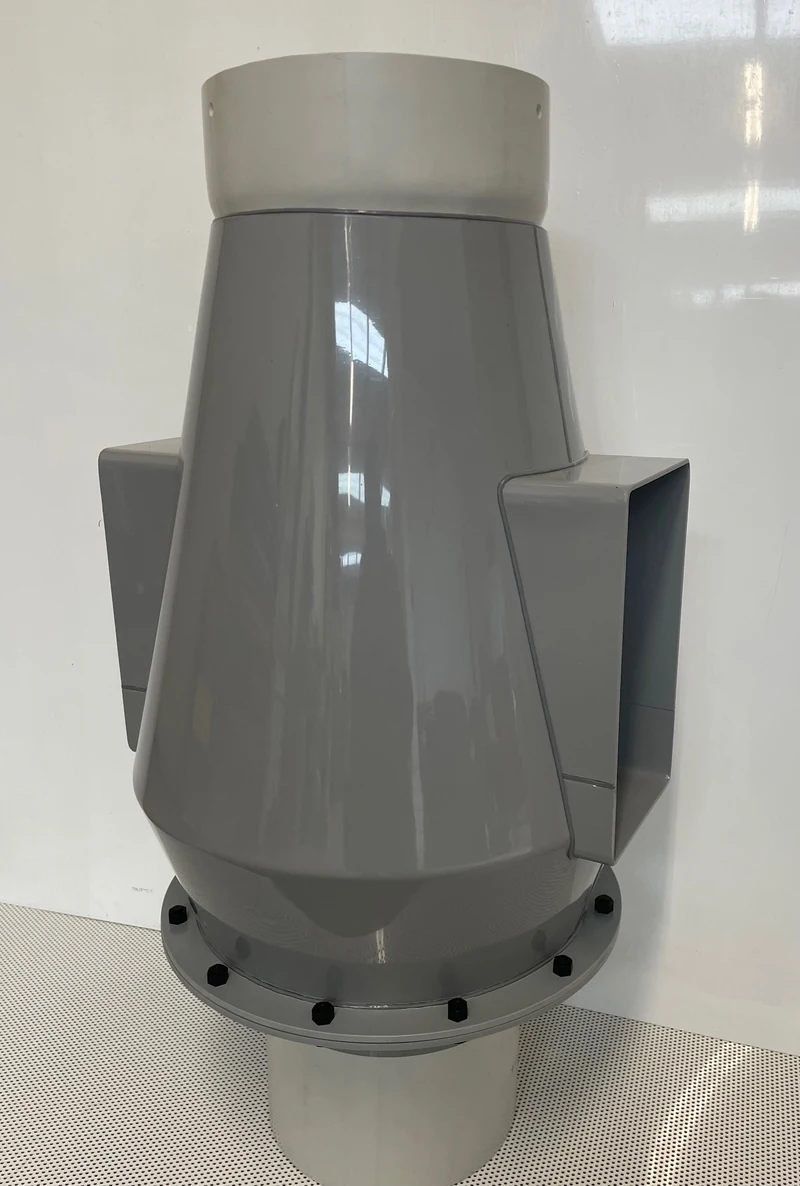
Describe the air and the duty
Record the substances, expected temperature and operating pattern, together with the design airflow and pressure requirement. Include where those figures came from and whether they describe a new system or an existing installation.
Our corrosion-resistant fan guide helps organise the compatibility questions. Keep the process information with the duty figures so a technically suitable fan can be discussed against the actual application.
Compare the type and performance
Fan type describes the way air moves through the equipment; the performance curve shows how flow relates to pressure at stated conditions. Both matter when assessing whether a proposal suits the intended duty.
Read the centrifugal and axial comparison, then work through how to read a fan curve. Ask for the proposed duty point to be identified rather than comparing model names or connection diameters alone.
Check the installation around the fan
Look at the duct arrangement immediately before and after the fan, as well as the wider route. The installed airflow conditions can differ from the conditions used to produce a catalogue performance curve.
Allow access for future inspection and service. If noise is a concern, record where and when it is noticed, then use the noise and silencer guide to prepare a focused discussion about the source and possible treatment.
Shortlist the equipment with a clear brief
Bring the cupboard model, design duty, route sketch and connection details together before requesting a fan recommendation. For replacement work, include the existing nameplate and any changes made since the original installation.
Our Fumeflow selection page introduces the range conversation. The D250 and TD250 pages provide model-specific starting points for your enquiry.
Coordinate the proposed fan with the ductwork design, especially its connections and route.
Start here
Understand the fan types first, learn to read the proposed duty point, then bring the complete brief to a Fumeflow selection discussion.
Explore this topic
- Centrifugal vs axial fans for ducted extractionCompare centrifugal and axial fan principles, then review duty, material compatibility and installation requirements for chemical exhaust.
- Corrosion-resistant fans for chemical exhaustPrepare a chemical-exhaust fan enquiry with process conditions, material questions and the required duty for Fumeflow equipment.
- Find the right fume exhaust fanReplacing a fan or planning a new cupboard? We can help match the fan to your system. Start with the cupboard model or a photo of its label.
- Is your fume extraction too noisy?If fan or duct noise is making teaching or laboratory work difficult, tell us what you hear and where. We can discuss the system and whether a silencer may help.
- Fumeflow D250An exhaust fan for Smoothflow and SashDrive fume cupboards. FumeCare manufactures the range in New Zealand and can help with a new system or a replacement enquiry.
- Fumeflow TD250An in-line exhaust fan for Student fume cupboards. FumeCare manufactures the range in New Zealand and can help you check the right fan for your cupboard.
- How to read a fan curve for an extraction proposalLearn how to read airflow, pressure and duty points on a fan curve before comparing laboratory extraction equipment.
- Fan Affinity Laws: Speed, Flow and PowerUse fan affinity laws to compare speed, airflow, pressure and power, with worked examples and clear limits. Discuss your extraction duty with FumeCare.
- Static Pressure vs Total PressureCompare static, velocity and total pressure in an extraction system, with an SI example. Ask FumeCare to review the pressure basis of your fan duty.
- Fan System Effect: Inlet and Outlet LayoutUnderstand fan system effect from inlet obstructions, bends and outlet layout. Prepare the drawings FumeCare needs to review an extraction installation.
- Centrifugal Fan Rotation: Direction ChecksCheck centrifugal fan rotation, viewing direction and discharge orientation before commissioning. Send FumeCare the model and installation details.
- Fan Static Efficiency: Calculate and CompareCalculate fan static efficiency and distinguish shaft power from electrical input. Use a worked example, then discuss your fan selection with FumeCare.
- Fan Stall and Surge: Causes and ChecksUnderstand fan stall and surge, the symptoms to record and the checks needed before changing speed. Discuss an extraction problem with FumeCare.
- Fans in Series and Parallel: Compare DutiesCompare fans in series and parallel using combined curves, operating modes and failure conditions. Discuss your extraction design with FumeCare.
- Fan Vibration Causes: Mechanical or Airflow?Compare mechanical, airflow and structural fan vibration causes. Record the right symptoms and arrange an extraction-system assessment with FumeCare.
- Belt Drive vs Direct Drive FanCompare belt drive and direct drive fans for maintenance, speed control and motor location. Discuss the complete extraction duty with FumeCare.
- Centrifugal Fan vs Inline Fan: What's Different?Understand centrifugal fan vs inline fan terminology, compare duty and access, and choose suitable chemical extraction equipment with FumeCare.
- What Is a Centrifugal Fan?Learn what a centrifugal fan is, how its wheel and casing move air, and what matters in chemical extraction. Discuss a Fumeflow selection.
- Forward Curved vs Backward Curved FanCompare forward and backward curved centrifugal fans by blade direction, duty and power curve. Discuss suitable chemical extraction with FumeCare.
- Fan Bearing Maintenance: Service PlanningPlan fan bearing maintenance using the correct bearing type, lubricant instructions and condition records. Discuss extraction fan service with FumeCare.
- SISW vs DIDW Fan: Single and Double InletsCompare SISW and DIDW fan inlet arrangements, clearance and duty. Understand the terminology before discussing chemical extraction with FumeCare.