Describe the complete air stream
List the substances that may enter the exhaust, including mixtures, cleaning agents and by-products. Add the concentrations and temperatures relevant to normal work and foreseeable changes. Include available safety data sheets.
A material’s resistance depends on its exposure conditions. The term corrosion-resistant does not make every fan suitable for every chemical process.
Review the whole assembly
| Part of the decision | Question to resolve |
|---|---|
| Wetted components | Which materials contact the exhaust? |
| Motor arrangement | Where is the motor relative to the air stream? |
| Operating duty | What airflow and pressure are required? |
| Site conditions | Where will the fan be installed and maintained? |
Use the Fumeflow fan guide to compare the documented equipment roles.
Match the fan to the connected system
Confirm the cupboard, duct route and discharge before final selection. The fan must deliver the required duty through that arrangement. Include transitions and any silencer in the design information.
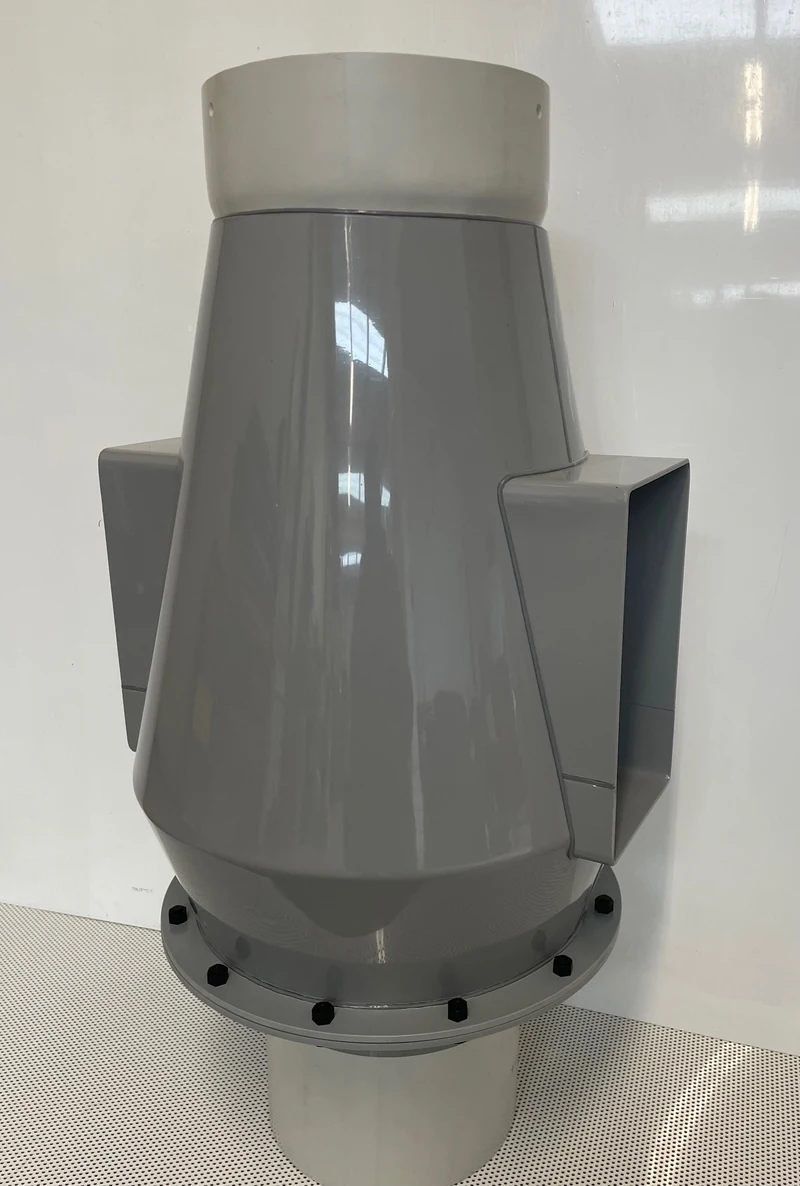
For model information, see the D250 and TD250 pages. Our PVC ducting guide helps coordinate the adjoining material specification.
The centrifugal and axial comparison explains fan principles without replacing the duty and compatibility assessment.
Make replacement enquiries specific
- Record the existing fan model and identification plate.
- Provide the original duty or available test information.
- Describe damage, deposits or changes in performance.
- Identify any process changes since installation.
- Show the connections and access in safely taken photographs.
Have the cause of deterioration assessed before replacing a component. A like-for-like part may not resolve a changed process or operating condition.