Identify the cabinet and its contents
Record the cabinet make and model and obtain its installation instructions. List the chemical types, quantities and storage conditions, with safety data sheets available to the person assessing the arrangement.
The cabinet’s purpose and construction matter. Ventilation requirements should be assessed with the cabinet instructions and the stored substances. Keep any required fire performance and chemical segregation in that discussion.
Our chemical-storage guide explains why a working fume cupboard chamber and a storage cabinet have separate roles.
Give the ventilation designer a usable brief
| Information | Why it helps |
|---|---|
| Cabinet label and instructions | Identify the construction and intended ventilation connections. |
| Chemical inventory | Establish the substances, quantities and compatibility questions. |
| Room and route sketch | Review the cabinet position, proposed duct and discharge. |
| Existing fan details | Identify the equipment and controls for a replacement enquiry. |
| Operating requirements | Agree the required duty, checks and response to a fault. |
Where the D65 belongs
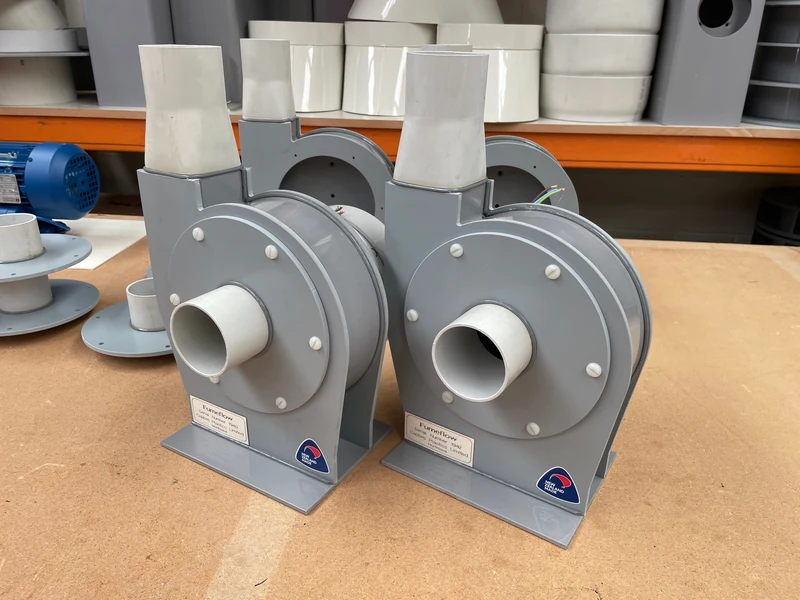
The Fumeflow D65 is our small fan for chemical-storage-cabinet ventilation. It is made for a 65 mm pipe connection, with the motor outside the airflow.
Give us the cabinet details and the proposed system duty before selecting a fan. Match the fan to the required airflow and resistance of the installed system. The duct, fittings and discharge arrangement also need to be assessed.
For a cupboard working chamber, use our fume exhaust fan selection guide. That is a different application from ventilating a storage cabinet.
Keep the complete system in the handover
Confirm who is responsible for the cabinet connection, ductwork, fan, electrical work and checks. Ask for the operating instructions and the records needed to identify the installed arrangement later.
For example, a replacement enquiry should say which cabinet the fan serves and include its label, rather than ask only for a small extraction fan. Tell us about any changes in chemicals or cabinet use since the system was installed.
Our chemical-resistant ducting guide helps you describe the chemical duty and route. Leave alterations to the cabinet and extraction system to the appropriate project specialists.