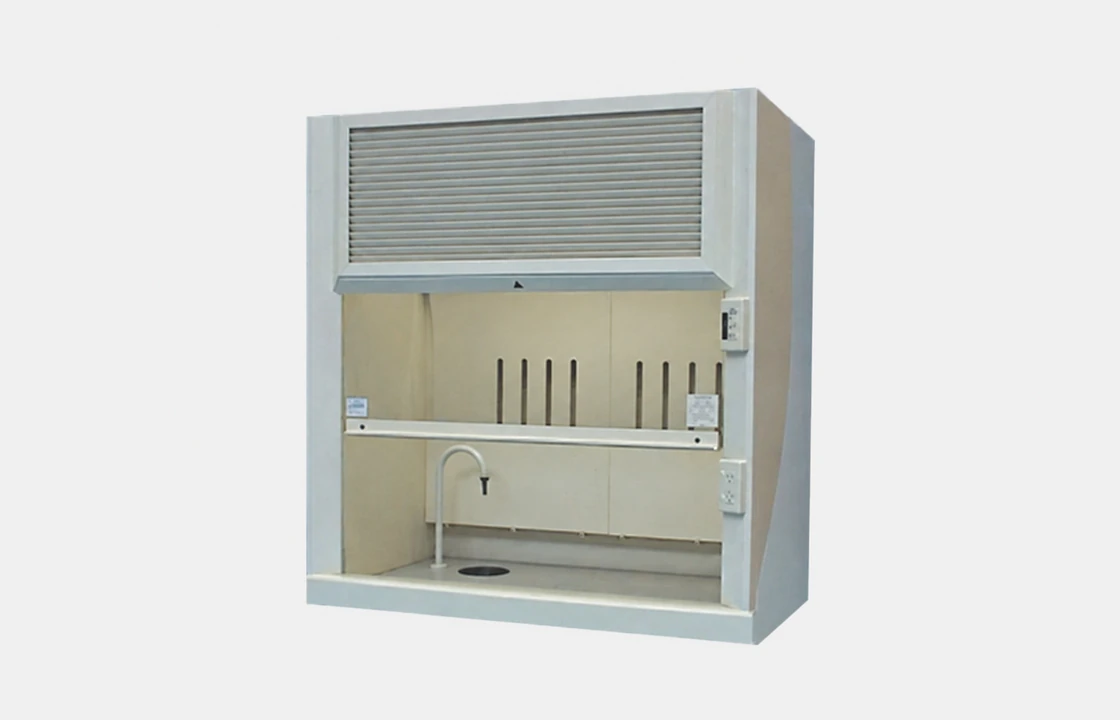
Keep only what the task needs
Our model operating guidance calls for removing items that are not needed before work starts and returning chemicals to a suitable store. Excess equipment and vessels can interfere with airflow and reduce the space available for the task.
Distinguish substances actively required by an approved procedure from bottles left in the chamber because there is nowhere else to put them. Your laboratory’s chemical-storage arrangements should address the latter.
Review the contents with this checklist
| Item in the chamber | Question to resolve |
|---|---|
| Chemicals for today’s procedure | Are the substances and quantities included in the approved task? |
| Spare bottles | Which appropriate chemical store should hold them? |
| Waste containers | What does the waste-handling procedure require? |
| Unused apparatus | Can it be removed so the task has enough space? |
| Unidentified material | Who will identify it and arrange safe handling? |
Separate the cabinet from the working enclosure
A storage cabinet has a different role from the fume cupboard chamber. Its suitability depends on the substances and storage requirements. Cabinet ventilation also needs its own assessment and should follow the cabinet instructions.
We make the D65 for chemical-storage-cabinet ventilation. For that application, gather the cabinet identification, chemical inventory and proposed route using our cabinet ventilation guide. A cupboard fan and a storage-cabinet fan are not selected simply by matching connection size.
Leave a clear area for the next user
At the end of the procedure, deal with chemicals, waste and equipment under the laboratory’s instructions. Record any residue or fault that needs attention. Keep the chamber ready for the next approved task.
If recurring storage problems arise because apparatus no longer fits, review the task and available working space with the supervisor. We can discuss the cupboard configuration and help identify the equipment information needed for that review.
Use our cleaning preparation checklist when organising routine surface cleaning after the chamber is cleared.