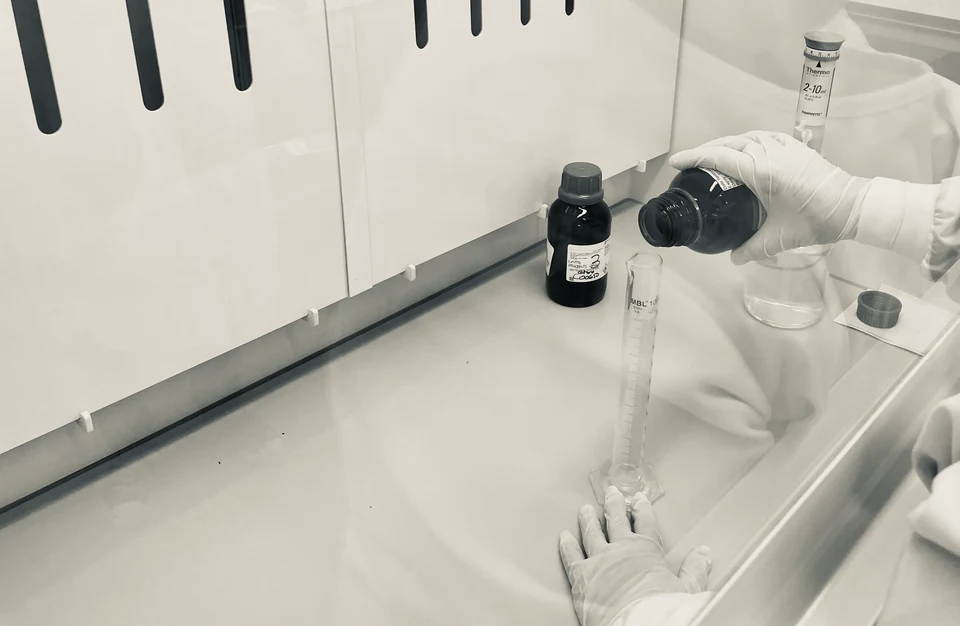
Begin with the procedure and its risks
Describe the substances, equipment and steps that could release contaminants. Include unusual work, cleaning and changes to the process, then review the required controls with the responsible laboratory person.
The risk-assessment guide helps organise those inputs. Our explanation of how a fume hood moves air gives new users a starting point for understanding the equipment around them.
Make training specific to the cupboard
A useful induction shows people the actual sash, airflow indication, controls and fault-reporting route they will use. It also gives them a chance to explain the local stop-work procedure back to their supervisor.
Use the supervisor’s training plan alongside the unit’s instructions. Follow it with the practical operating checklist, adapted to your approved procedure and laboratory arrangements.
Keep the intended air path clear
Plan the working setup around the cupboard’s designed airflow. Apparatus placement, the sash opening and obstructions can all affect the way air moves through the enclosure.
Read about the sash, rear baffles and front airfoil. Keep routine chemical storage in its appropriate location; the storage guide explains the distinction between a working enclosure and a storage arrangement.
Give faults a clear response
Know who receives a fault report and how affected work is restricted. If an alarm sounds or extraction seems unsafe, follow your site procedure and notify the responsible person rather than adjusting the system to continue.
The airflow-alarm guide helps you capture useful observations. Record the equipment identity, displayed indication and recent changes so a service discussion begins with clear information rather than a guessed diagnosis.
Keep the operating guidance connected to your fume hood maintenance plan.
Start here
For a new team member, start with the air path, connect it to the procedure’s risks, then complete a supervised induction on the actual equipment.
Explore this topic
- Responding to a fume hood airflow alarmRespond to a fume hood airflow alarm under your site procedure, then record the model, displayed status and fault history for FumeCare.
- Airfoils on fume hoods: protect the entry airflowUnderstand the front airfoil on a fume cupboard, keep the intended air path clear and prepare a component service enquiry.
- Baffles in a fume hood: keep the air path clearIdentify the role of fume-hood baffles, keep air paths clear and prepare useful information for a cupboard service enquiry.
- Can a fume hood be used for chemical storage?Separate chemical storage from the fume cupboard working area. Use a practical inventory and handover checklist to keep the chamber ready for work.
- Do fume hoods have filters?Find out how ducted extraction differs from filtered fume hoods, what particle filters do, and which equipment details to include in an enquiry.
- How a fume hood moves airUnderstand how a ducted fume hood, fan, ductwork and room air supply work together. Identify your Calibre equipment and prepare a useful enquiry.
- Using a fume hood: a practical checklistPrepare for chemical work with a practical fume hood checklist. Follow your laboratory procedure and model instructions, and arrange service help when needed.
- Working with your fume hood sashUnderstand the fume hood sash working position, how Calibre designs manage airflow, and which details to record when reporting a sash fault.
- Fume-hood training: an induction plan for supervisorsUse a supervisor's induction outline to demonstrate cupboard operation, discuss fault scenarios and record equipment-specific training.
- Risk assessment for fume-hood work: prepare the inputsGather process, equipment and operating information for your laboratory's fume-hood risk assessment and change review.
- Are fume hoods explosion proof?Understand the difference between fume extraction, ignition protection and blast containment, then prepare the right questions for a specialist assessment.