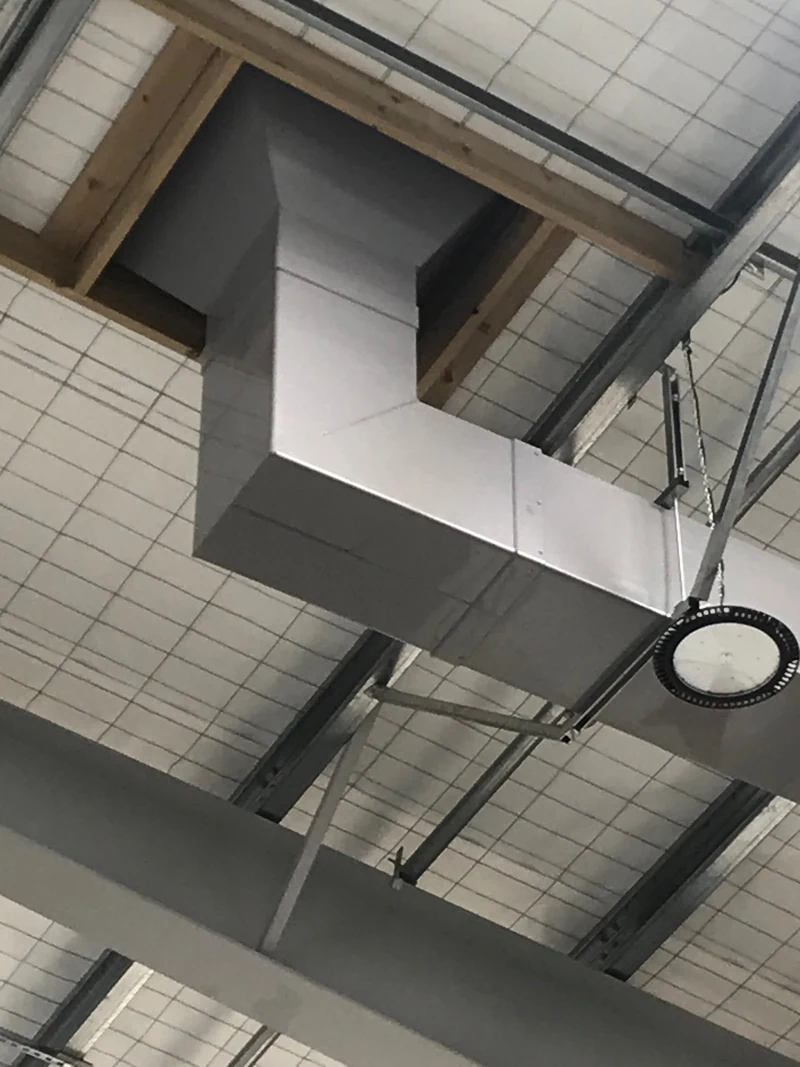
Distinguish a route from a connector
A rigid duct route carries exhaust between equipment and discharge. A flexible connector may have a specific role at an equipment interface. Those roles should be shown on the design drawing rather than treated as interchangeable lengths of duct.
Identify exactly which material and construction are proposed. A product described simply as flexible duct may be intended for a different ventilation application.
Compare the practical questions
| Question | What to establish |
|---|---|
| Compatibility | Suitability for chemicals, temperature and operating conditions. |
| Shape | Dimensions and geometry in the installed position. |
| Support | How the section is held without distortion. |
| Performance | Pressure loss and conditions at equipment connections. |
| Access | How joints and vulnerable sections will be inspected. |
The chemical-resistant ducting guide is the starting point for the material review.
Avoid solving a layout problem in isolation
A last-minute connection change can affect airflow, access and reliability. Show the revised arrangement to the designer and equipment supplier before installation. Include the space available around the fan and the orientation of nearby bends.
Use the PVC fitting schedule to describe a fabricated alternative clearly. Our pressure-drop guide explains why the final arrangement belongs in the system calculation.
Plan inspection from the start
Give the facilities team a record of the installed materials and joint details. Identify sections that require routine condition checks and provide access to inspect them safely.
- Keep the duct specification with the final drawing.
- Record the manufacturer and type of any flexible connection.
- Show support and access arrangements.
- Refer damaged or altered sections for assessment.
A replacement should match an assessed specification, rather than only the old part’s diameter.