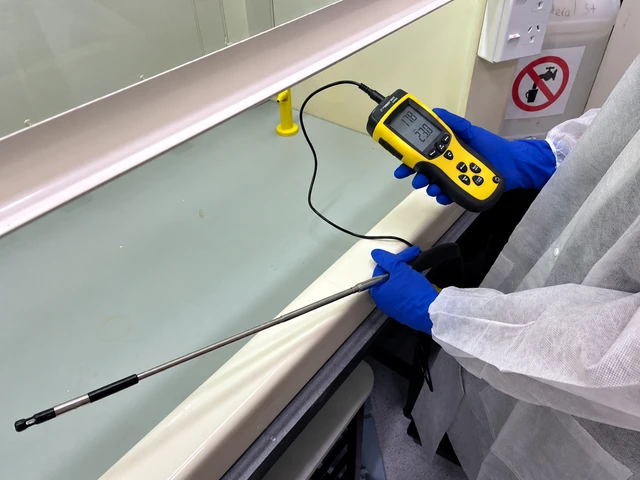
Speed, volume and containment answer different questions
| Term | What it describes |
|---|---|
| Face velocity | Air speed through the defined front opening, commonly expressed in metres per second. |
| Air volume flow | The quantity of air moving through the system over time. |
| Containment | How the installed enclosure controls the release of contaminants under the assessed conditions. |
A single speed reading does not describe every aspect of the installed system. The opening, airflow pattern and test conditions matter when the result is interpreted.
Read the conditions alongside the number
Look for the cupboard identity, test date, sash position and the method used. Check whether the report records several measurement points, an average and observations about the room or equipment arrangement.
- Does the asset number match the cupboard you are discussing?
- What opening height was used during the test?
- What operating condition and acceptance criteria are recorded?
- Are any defects, restrictions or further actions listed?
If something is unclear, send us the report rather than just one number copied from it.
Why the opening and room matter
Moving the sash changes the opening through which air enters. Different cupboard designs manage that change differently. Doors, supply-air outlets and movement near the cupboard can also affect the airflow at the working opening.
The appropriate operating and acceptance requirements come from the assessed installation, applicable requirements and model instructions. Keep the installed settings and labelled working position under the site’s approved procedures. A generic figure from a different model is not a setting to copy.
Our sash-operation guide explains the working opening. For the wider system, follow how a ducted fume hood moves air.
Turn a concern into a useful enquiry
Record what you observed, when it happened and the cupboard’s displayed status. Include any change in room use, ventilation or equipment layout. Leave adjustments, sensor checks and testing to the appropriate technician.
We offer fume cupboard testing. For a fault or change in operation, our servicing enquiry guide helps you gather the model and fault details. If an alarm or suspected loss of containment occurs, follow your laboratory’s stop-work and incident procedure.