Start with the source
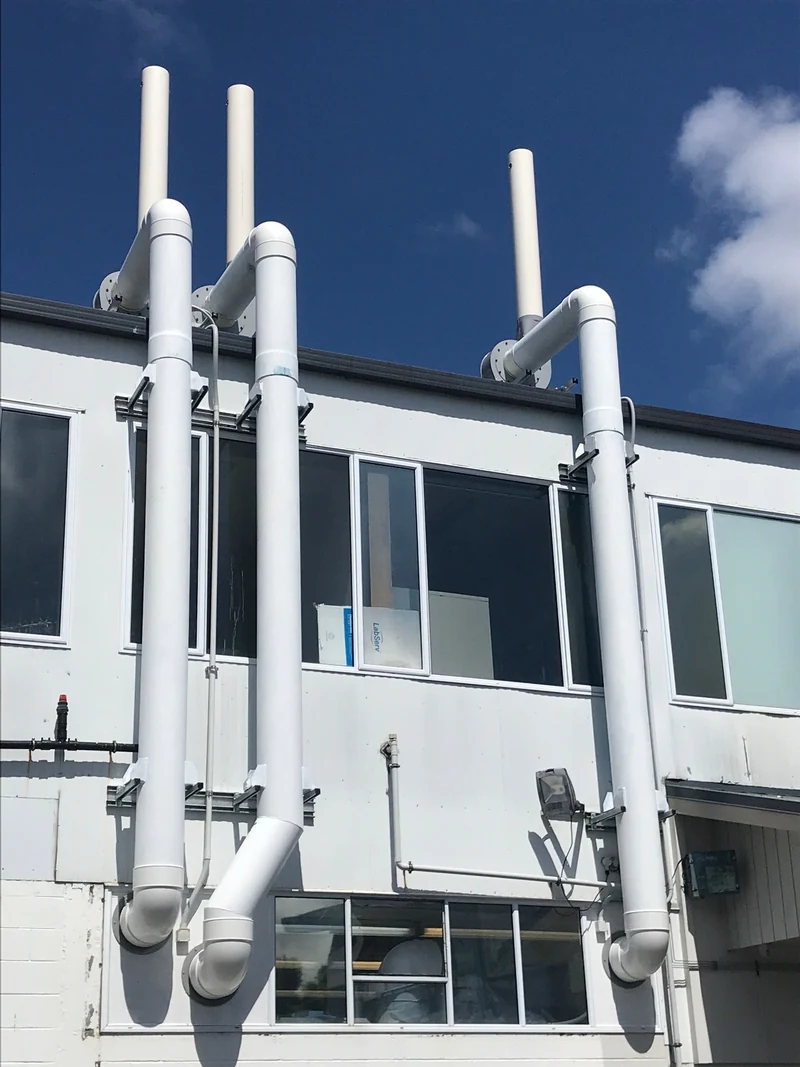
Local exhaust ventilation, often shortened to LEV, collects airborne contaminants near the activity that releases them. A fume cupboard is one form of local extraction: the work takes place inside an enclosure connected to an exhaust system.
Begin with the substance, the task and the way people use the space. Handling a small sample inside a cupboard presents a different design problem from an open industrial process. Your workplace risk assessment helps establish the required control, including any specialist assessment of exposure.
For an enclosed laboratory task, explore our Calibre cupboard comparison once the process requirements are clear.
If you are deciding between capture at the task and room-level air changes, compare local and general ventilation. The process-assessment inputs help your safety adviser define the requirements.
Give each component a defined job
| Part | Question to resolve |
|---|---|
| Cupboard or capture point | Can the work take place in the intended capture area? |
| Duct route | What material, connections and access will the route need? |
| Fan | What airflow must it deliver against the complete system resistance? |
| Discharge and room air | Where does exhaust go, and how is replacement air supplied? |
Use the fan-selection guide and chemical-resistant ducting guide together when preparing a proposal.
Coordinate laboratory room ventilation and the exhaust discharge with the building-services team before the route is fixed.
Choose the next step for your project
A new laboratory: identify the process, proposed cupboard location and available building services before equipment is ordered. Our installation planning guide helps divide responsibilities between the laboratory, builder and specialist trades.
A changed process: describe the new chemicals, equipment or workload and ask for the existing system to be reviewed. A change that fits physically can still affect the extraction duty.
An existing fault: follow the laboratory’s procedure for taking affected equipment out of use and arrange service support. Record what happened without adjusting fans, controls or ductwork.
Prepare one brief for the whole team
- List the substances, concentrations and available safety data sheets.
- Describe normal work, unusual operating conditions and any heat sources.
- Identify the cupboard, fan and ducting already in place.
- Mark the proposed extraction route and service access on a sketch.
- Name the people responsible for design review, installation, testing and ongoing care.
A shared brief helps prevent gaps between an equipment quotation and the building work. Keep the agreed drawings, operating instructions and handover records together so the facilities team can manage the complete installation.
Use the extraction design brief to assign the interfaces and keep equipment quotations aligned with the same project information.